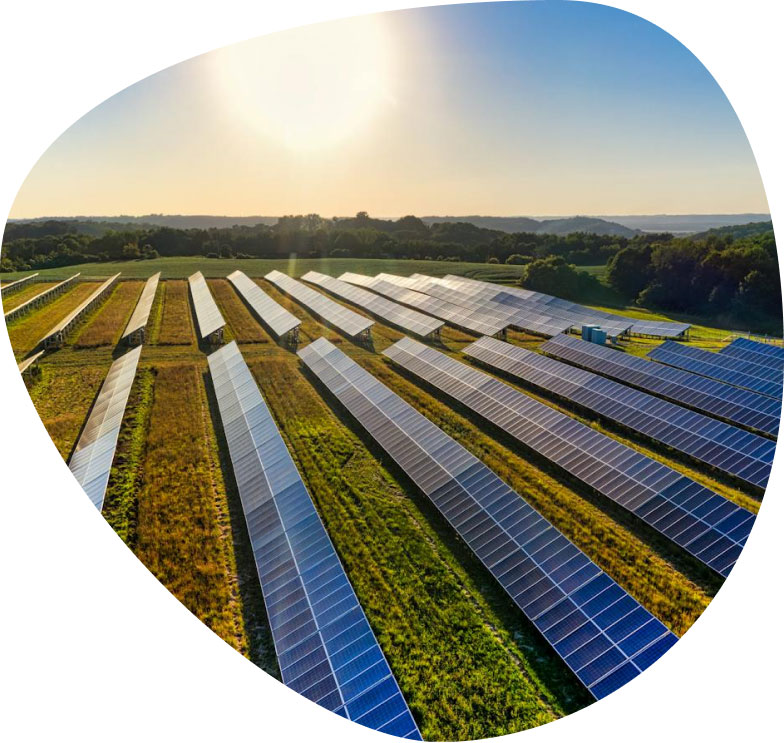
Lease your land for the installation of solar panels.
It all seems a bit too good to be true. In this guide, we’ll dig into what is driving these prices and how you can evaluate whether solar is right for you and your land.
What Kinds of Solar Programs Are There?
There are two main types of solar projects that get deployed on rural land, community solar projects and utility-scale solar projects.
Community solar projects
These projects tend to be smaller scale (usually 10-50 acres) and generate power for local consumption in the community. Because they transmit power over existing local power lines, they have lower infrastructure requirements and less construction. Community solar projects have become extremely popular due to government incentives, especially in traditionally underserved areas.
Utility-scale solar projects
These are bigger (100+ acres) and the power generated is sent all over the region rather than staying within the community. The scale of these projects requires more construction and larger power transmission infrastructure.
Why Are Solar Programs Becoming More Popular?
Solar projects have already been deployed on over 50,000 acres of land in the US and it’s likely to take 100 times more (about 5 million acres) for the US to meet its goal of 100% clean energy. Several factors are behind this enormous growth.
Cheaper solar panels
New technology has dramatically reduced the cost of deploying solar projects.
High demand
Corporations and consumers are increasingly demanding clean, affordable renewable energy to reduce their climate impact.
Government incentives
Both the Inflation Reduction Act (IRA) and the Solar Incentive Tax Credit (ITC) provide an economic stimulus to develop more solar energy projects.
Photovoltaic technology has been around since the 1950’s, but solar only started to become big business in the early 2000’s. This growth has created an equally large demand for land for solar projects.
- 100x growth of the solar industry since the 2000s
- 50,000 acres of land in the US where solar projects have been deployed
- 5-10 acres of solar panels needed to generate 1 megawatt of power
Where Can Solar Programs Be Installed?
To support the installation of thousands of solar panels, the land must be accessible and relatively flat (usually less than 10% slope). You’ll also need to be close to power lines that carry the energy produced by your project to the customers who are buying it. Going further than about half a mile increases the cost of the project significantly. The type of power lines you’ll need to support your project depends on the size of the project and how much energy it produces.
Electricity and water don’t mix, so you can’t have solar projects in areas that flood. Wetlands are also off limits, as are other ecologically protected areas.
Finally, other human factors can come into play. Your county’s local land-use policy and local electric utility may restrict your ability to build a solar project. The opinion of the community often plays a role as well throughout the extensive permitting process required by a solar project. The high demand for solar power and the limited number of available land for solar development have pushed solar lease prices very high.
When Does a Solar Program Start and End?
Leasing your land for solar is a long process and an even longer commitment. Projects typically take years to be fully permitted and installed and then you typically have a 30 year obligation to keep the panels on your property.
How Does a Solar Program Operate?
Solar programs are a big undertaking that span decades from the original site evaluation through construction, operation, and eventual decommissioning. There is typically no out-of-pocket expense for you as the solar developer typically covers all costs.
Evaluation and Permitting
There is a lot of upfront work in a solar project. It may take years to fully evaluate that the site is suitable and to secure the required permitting approvals. During this period, you typically receive an annual option payment. Projects may fail at this stage.
Construction
Installing all the solar panels and associated electrical infrastructure takes at least 3 months and often stretches to a year or more for larger projects. There will be a lot of activity on your land during this period.
Operation
Once the project starts generating electricity, you'll typically receive annual lease payments until the end of the contract term, which is usually about 30 years.
Decommissioning
Once the contract is completed, you may have the option to renew. If you'd like the land restored back to its original state, the developer is required to fully decommission the site. Most reputable developers have a "leave no trace" policy.
Risks, Rewards, and Restrictions
The payments associated with solar projects are some of the highest per-acre rates you’ll see anywhere.
Option Payments
During the evaluation phase, you receive a fee for the option to develop on your land. These can range from nominal amounts to hundreds of dollars per acre per year depending on the market and project size.
Lease Payments
Once the site is generating electricity, hefty lease payments kick in. These can range from hundreds to thousands of dollars per acre per year for 20-30 years.
Additional Incentives
Some developers offer bonuses for construction inconvenience, payments for increased property taxes, and even on-site solar energy for landowners who live at the project site.
Project Risks
Your project may not make it through permitting. Check if your developer has a solar decommissioning bond in place for long-term protection. Thirty years is a long time—will the company still be around?
Project Downsides and How to Mitigate Them
There are potential downsides to solar projects as well. Some projects are built on productive agricultural land, taking that area out of food production. Communities can be concerned about solar projects changing the character of the rural area, even while county commissioners rejoice at the prospect of a stable 30 year tax-base from the project. And even in welcoming communities, the construction of a big solar project can be a disruption to daily life.
You can mitigate some of these downsides. You can plant vegetation between the road and your solar project to screen the solar panels from public view, which your neighbors may be thankful for. You can also consider “agrivoltaics” which blends agriculture and solar power. If set up properly, you can graze sheep, keep bees, and even grow blueberries and other produce in between the rows of solar panels. These practices can improve soil health and revenue generation on solar sites.